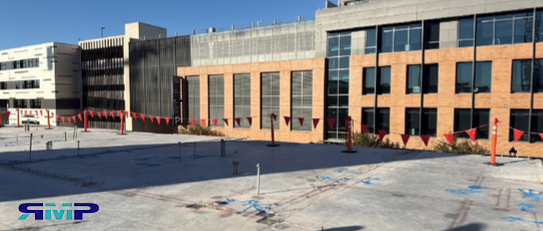
Warning Lines: What They Do, & What They Don’t
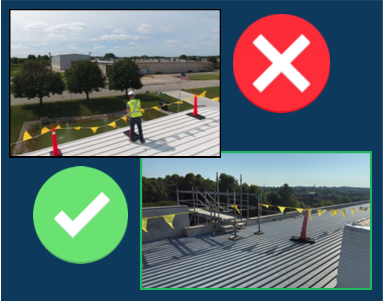
Every week I walk a jobsite, I see the same thing: bright red flags stretched across a roof, fluttering in the breeze, and nine times out of ten, somebody points to those flags and tells me, “We’ve got fall protection up there.”
Here’s the part most people miss: warning lines aren’t fall protection. They’re a heads-up, or A WARNING. They are not a safety system. So let’s break down exactly when warning lines count, when they don’t, and how to keep your crew out of trouble
What Warning Lines Are REALLY For
Think of a warning line like the yellow tape at a crime scene: it marks the boundary, but it doesn’t stop anyone from crossing it. That’s all a warning line does on a roof. It tells the crew, “This is where the danger zone starts.” It does not keep someone from falling.
That means if you’re relying on warning lines alone, the only thing keeping people safe is their decision to stay inside the line. And OSHA knows this – which is why the rules for using them are extremely specific.
Warning Lines Become Noncompliant When:
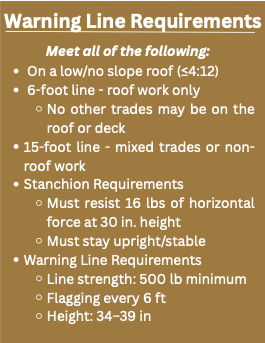
- The roof is steep
- A non-roofer steps inside 15 feet
- A roofer steps inside 6 feet
- Material is stacked near the edge
- The line sags, blows over, or gets knocked down
- Workers use it like a guardrail (leaning on it, stepping over it, tying things to it)
In these situations, OSHA expects real fall protection – something that actually stops a fall: guardrails, personal fall arrest, or, on rare occasions, a safety monitor (roofing only, and very controlled).
Why RMP Pushes This So Hard
Because this is where companies get burned. Flag lines look safe. They feel safe. They give everyone a false sense of security. The moment someone crosses the line – even one step closer to the edge – the whole system collapses, and the liability lands on the GC.
If you want to protect your people and your business, you can’t treat warning lines like railings.
If you want to be sure, remember: “Flags are for eyes, harnesses are for lives.”