Most Incidents Start in the Mind: Why Mental Fitness is the Missing Link in Safety and Performance
Walk any work area and you’ll see it: workers rushing to meet deadlines, juggling frustrations with trade partners, and trying to manage constant distractions. Add in the stress of life outside of work, and it’s no wonder small mistakes turn into big incidents.
Here’s the uncomfortable truth:
Most incidents don’t happen because people don’t know the rules. They happen because people weren’t paying attention when it mattered most. What’s really uncomfortable? We’re all inattentive to a degree.
Distraction. Frustration. Mental fatigue.
These are the silent hazards that never make it onto a JHA. And, they’re behind more incidents, loss, and near misses than we realize.
The Real Root Cause: Attention
We’ve built our safety systems around eliminating physical hazards, and that’s important.
But the harder challenge is protecting mental energy. When a worker is distracted or frustrated, their ability to focus drops. When attention drops, errors rise. And unlike physical hazards, we can’t eliminate every stressor, on or off the job. But we can train our people to respond differently. That’s where mental fitness comes in.
What Is Mental Fitness?
Mental fitness is not therapy, and it’s not a one-off mindfulness workshop. It’s the same
principle as physical training — regular reps that build strength. In this case, mental
strength.
Instead of training muscles, we’re training focus, resilience, and emotional control. The
result? Workers who are more present, less reactive, and more capable of managing
stress before it turns into an incident.
This isn’t theory. It’s grounded in neuroscience, specifically neuroplasticity.
The Science: Neuroplasticity
Neuroplasticity is the brain’s ability to rewire itself. It’s how new habits form and old ones fade. Just like you build physical strength by repeating exercises, you build mental strength by practicing skills like breathing techniques, reflection, and attention control.
Every time a worker pauses before reacting…
Every time they reset their breath instead of lashing out in frustration…Every time they refocus on the task at hand…
They’re literally rewiring their brain toward safer, more productive responses.
Why This Matters for Safety and Performance
Safety isn’t just about checklists and compliance anymore. If it were, we would have ZERO incidents! Instead, it’s about how people show up mentally each day. And in today’s environment of constant noise, pressure, and distraction, mental fitness isn’t optional anymore, it’s essential. Mental clarity = Maximal performance.
When people are mentally steady, they make better decisions, avoid shortcuts, and reduce errors. That’s good for safety, good for productivity, and good for morale.
The Next Step
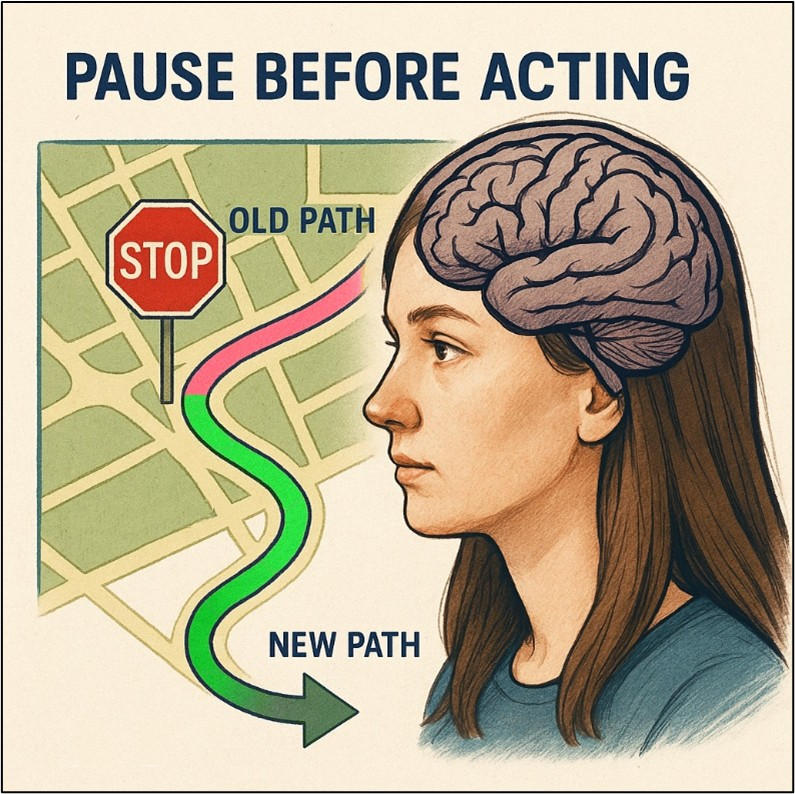
We can’t remove every stressor, frustration, or negative stimulus from the job. What we can do is train people to put a pause between the trigger and their response. That pause is where good decisions happen — and where mistakes are avoided. It’s the difference between a reaction, and deliberate response.
Mental fitness training is about building that pause on purpose. Just like physical reps at the gym, every time you practice slowing down, breathing, and choosing your response, you’re strengthening that mental muscle. Over time, the pause gets bigger, and the response gets better.
In the next article, we’ll break down exactly how this works — and how you can use simple tools like breathwork to create that space when it matters most.
If you’d like to get on our waiting list, or just want more information, please contact us
here.